

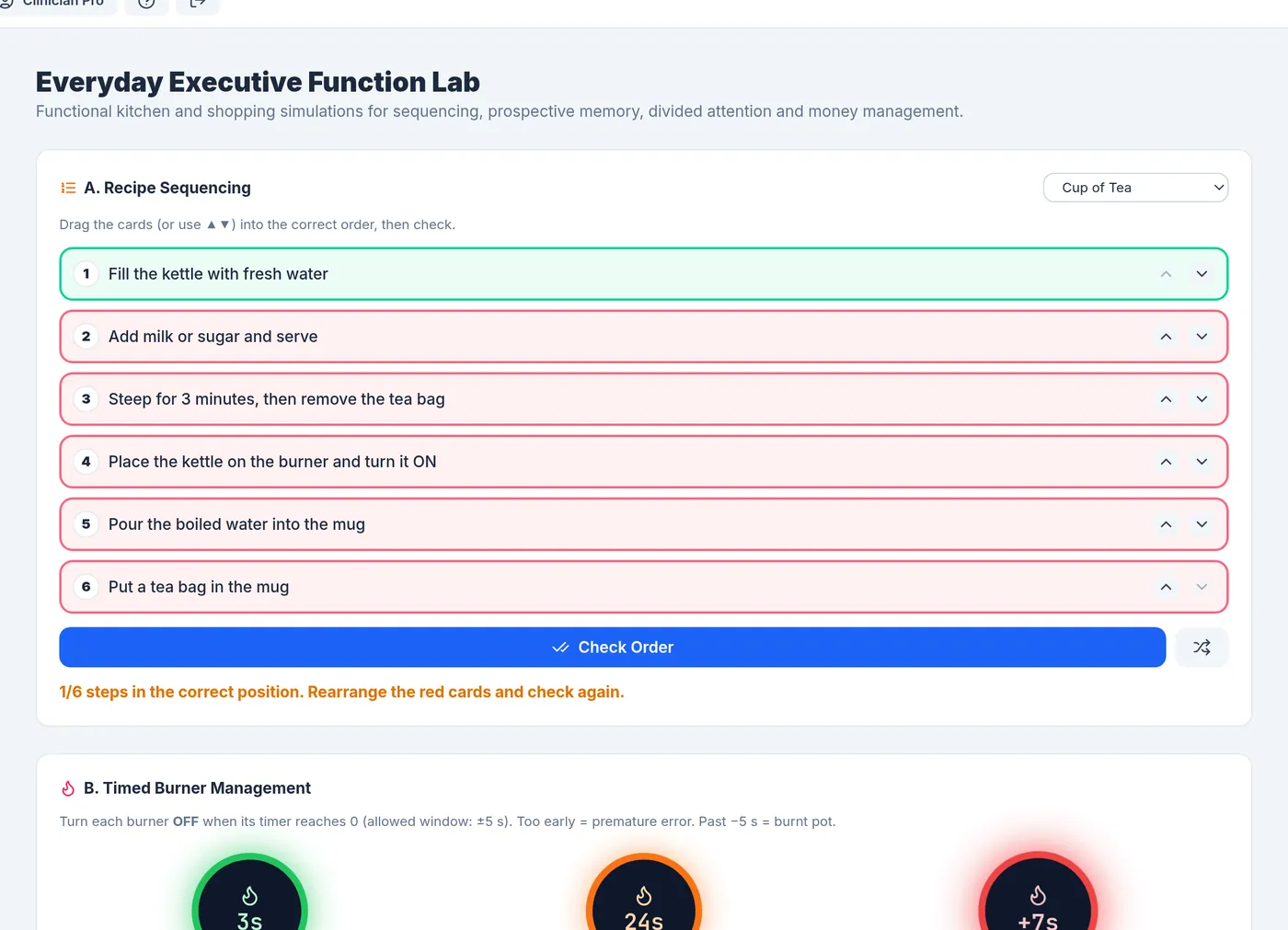
A. Recipe sequencing
Six steps of a familiar routine appear in a shuffled order. The patient drags them into the right order (or uses the ▲ ▼ buttons, which also work with switch control) and presses Check order. Steps in the right position turn green and the rest turn red.
- Correct on the first attempt scores 100%; each extra attempt costs 20 points, down to 40%.
- After four unsuccessful attempts the correct order is shown and the result is recorded.
- Routines: a cup of tea, scrambled eggs, grilled cheese, and taking morning medications from a pill organiser.
B. Timed burner management
Three burners (a kettle, a pasta pot and a frying pan) start counting down together. Each must be turned off within five seconds either side of zero. A burner glows green inside that window and red once it is more than five seconds late.
- On time: switched off within ±5 seconds.
- Premature: pressed more than five seconds early. The burner stays on and the error is counted.
- Late / burnt: switched off 5–10 seconds late, or left on more than 10 seconds past zero.
Three timing patterns are available: staggered, overlapping and near-simultaneous. Running the recipe task while the burners count down turns it into a dual task.
C. Functional micro-budgeting
A receipt lists three to five grocery items with prices and the bill used to pay ($20, $50 or $100). The patient enters the total and the change. Both are checked to the cent, with up to three attempts before the working is shown.
What is recorded
| Task | Recorded |
|---|---|
| Sequencing | Routine, steps in position, attempts |
| Burners | On time, late, burnt and premature counts; mean timing error |
| Budgeting | Items, total, amount paid, attempts and correctness |
These tasks are structured practice for planning, sequencing, prospective memory and money handling. They are not a substitute for observing real kitchen or shopping tasks.